
What does charging a Tesla really cost?
The formula fits on one line: energy received times price per kilowatt-hour. All the work is knowing those two numbers, and that is where the math usually goes wrong.
The formula, and the first pitfall
A 20% to 80% charge on a 75 kWh usable pack is about 45 kWh received. At $0.15 per kWh at home that is around $7; the same fill at $0.45 at a Supercharger is about $20.
First pitfall: the car's counter measures what ENTERS the battery, your home meter what LEAVES the wall. The difference is conversion loss, roughly 10 to 15% on AC. Your utility bills the wall, not the battery.
Home, public charger, Supercharger: three prices
At home the price is your contract's, and it can double between peak and off-peak. On public chargers it depends on the network, the power and sometimes the time plugged in. At Superchargers, Tesla bills per kWh at a rate that varies by site and hour.
The classic mistake is counting every session at the home rate: one misfiled fast charge skews the whole month. The reliable test is DC current: nobody has a DC charger at home.
Keeping the log without a spreadsheet
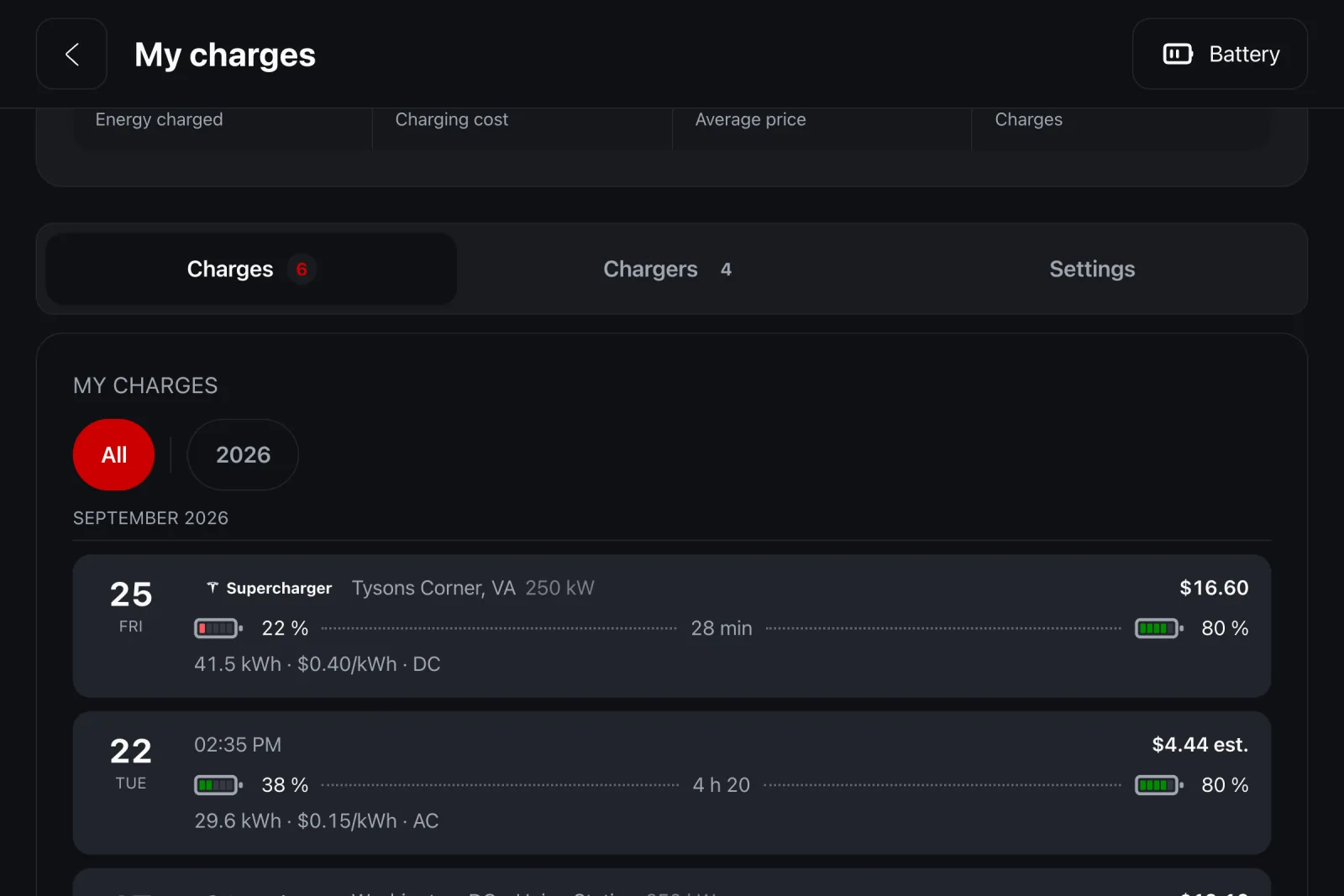
iCar keeps this log automatically: every session with its real energy (read from the car's own counters), the recognized charger, and the cost. You enter your two rates once, home and public; amounts actually billed by Tesla at Superchargers replace the estimate as they arrive.
And with no rate entered, iCar shows no price at all: an invented number would be plausible and wrong, and it is a number people copy into their accounts.
Ready to try? The bookmark grid is free, with no time limit.
Download